
Comparison Trap: How to Stop Measuring Your Life Against Everyone Else's
Constant comparison with other people's highlights drains contentment and distorts your sense of progress....

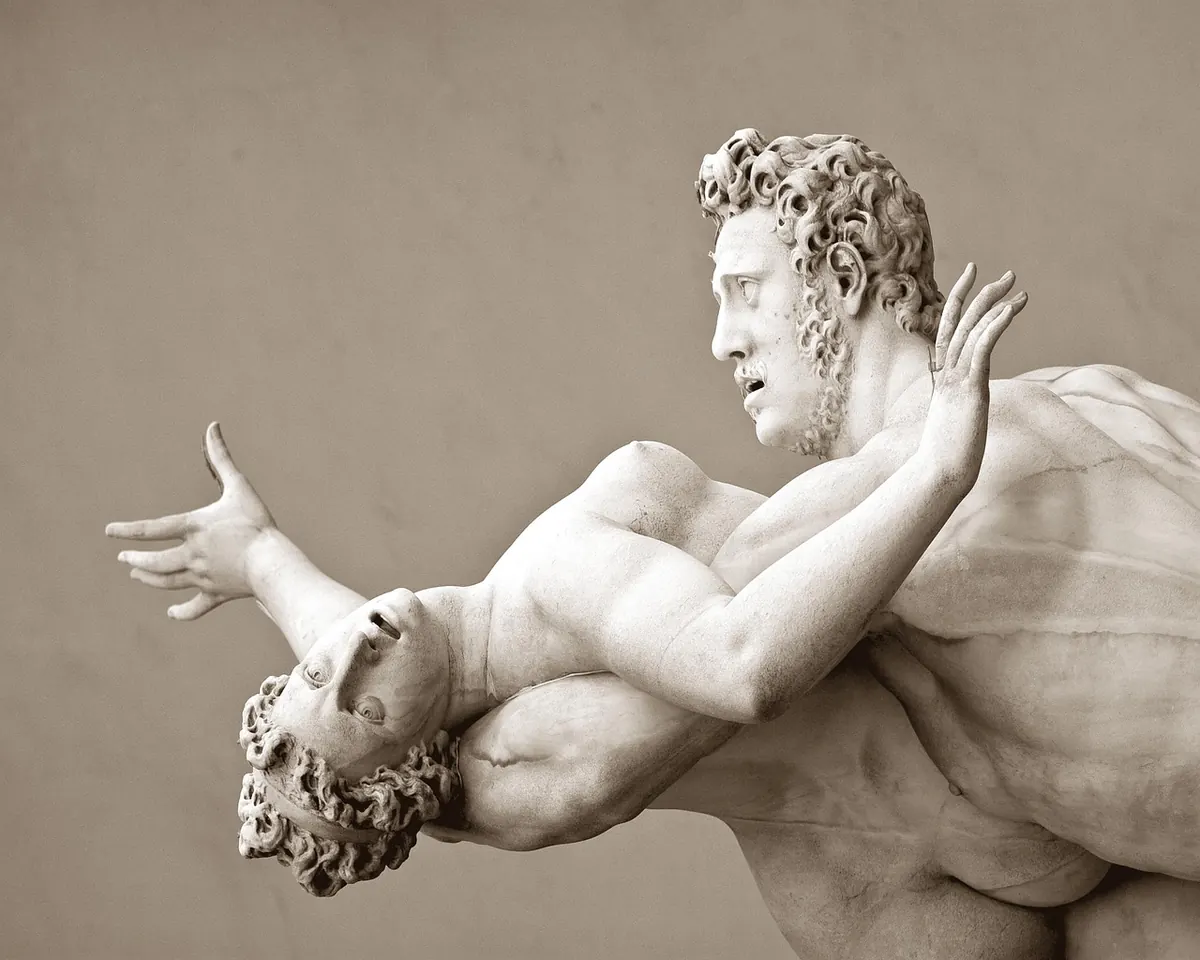
The word "stoic" usually appears in a sentence like "he was very stoic about it", meaning he didn't cry, didn't complain, and got on with the job. That describes a person gritting their teeth. It is not what the Stoics taught.
Stoicism was a philosophy of the Greek and Roman world, and it asked a larger question than how to look unbothered. It asked how to live well: how to stop being thrown around by things outside your control, how to act decently when it is inconvenient, and how to want better things in the first place. The calm that observers notice is a by-product, not the aim.
Three misreadings cause most of the confusion, and clearing them up saves a lot of time.
Stoicism began in Athens around 300 BC, when Zeno of Citium taught under a painted colonnade — the Stoa Poikile, which gave the school its name. It later took root in Rome, where it produced the three writers most people read today: Seneca's letters, Epictetus's Enchiridion, a short handbook compiled by a student, and Marcus Aurelius's private notes, usually published as Meditations. None of these are mystical texts. They are closer to a training manual: arguments to be tested and exercises to be repeated.
Epictetus opened his handbook with a distinction that does most of the work in the whole philosophy. Some things are up to us, and some are not. Your opinions, aims, desires and reactions belong to the first group. Your body, your reputation, other people's decisions and the outcome of your efforts belong to the second.
Take a delayed train. You have no say over the signalling failure. You do have a say over the forty minutes that follow: refreshing the departure board every ninety seconds, or answering the two emails you have been avoiding. The delay is the same either way. The damage is not.
This is not a licence to blame yourself for everything. It is the opposite — a way of refusing responsibility for things that were never in your hands. Sort accurately, then spend your effort where it can change something.
Epictetus made the point that people are disturbed not by events, but by their judgements about them. The wording varies between translations; the substance is blunt. Something happens. You react to what you have decided it means.
A client replies to your proposal with nine words and no greeting. That is the event. The judgement arrives a second later: she is annoyed, the work is falling apart, you will have to explain yourself. None of that is on the screen. It is a hypothesis wearing the costume of a fact. Ask what you actually know, then ask what you would do if a friend described the same situation to you. You will usually find one small, sensible action — a clarifying question, a phone call, a night's sleep — that the panic was hiding.
Stoicism is not only a technique for staying calm. It is an ethical philosophy, and its centre is character. Four virtues carry the weight:
Under this scheme, health, money and reputation are worth choosing, but they are not the measure of a life. The Stoics called them preferred indifferents: you can want them and work for them without handing them the keys to your self-respect. That distinction is what lets a person lose an argument, a job or a deal and still behave well the next morning.
One honest caveat. If anxiety or low mood is persistent, intense, or interfering with ordinary life, a philosophy book is not a treatment. Speak to your GP or another qualified professional. Stoic exercises work well alongside proper help; they are not a substitute for it.
Reading about this is easy. Using it takes a few minutes of deliberate effort, usually at the worst possible moment.
One week is long enough to find out whether this suits you. Pick a single practice and repeat it daily rather than trying all of them at once.
Spend the first two days on the pause: when something stings, wait ten seconds before responding and identify what is in your control. Add the evening review for the rest of the week. If you want reading to go with it, the Enchiridion is the shortest and most practical of the ancient texts, and it was written for people with no background in philosophy.
Expect it to feel artificial at first. It is. Stoic practice is a set of habits, and habits are clumsy
Photo: Briam-Cute / Pixabay
Constant comparison with other people's highlights drains contentment and distorts your sense of progress....
Regret is information, not a verdict. A practical process for limiting the damage, extracting the right...
Thinking on foot has a long pedigree, from Aristotle's walking school to modern research on attention and...